Likes
Instagram Like Counter: What the Number Means (2026)
What Instagram's like count shows, why hidden likes aren't zero, and a copy-ready spreadsheet to track a post's likes-to-followers ratio.
Oct 4, 2026
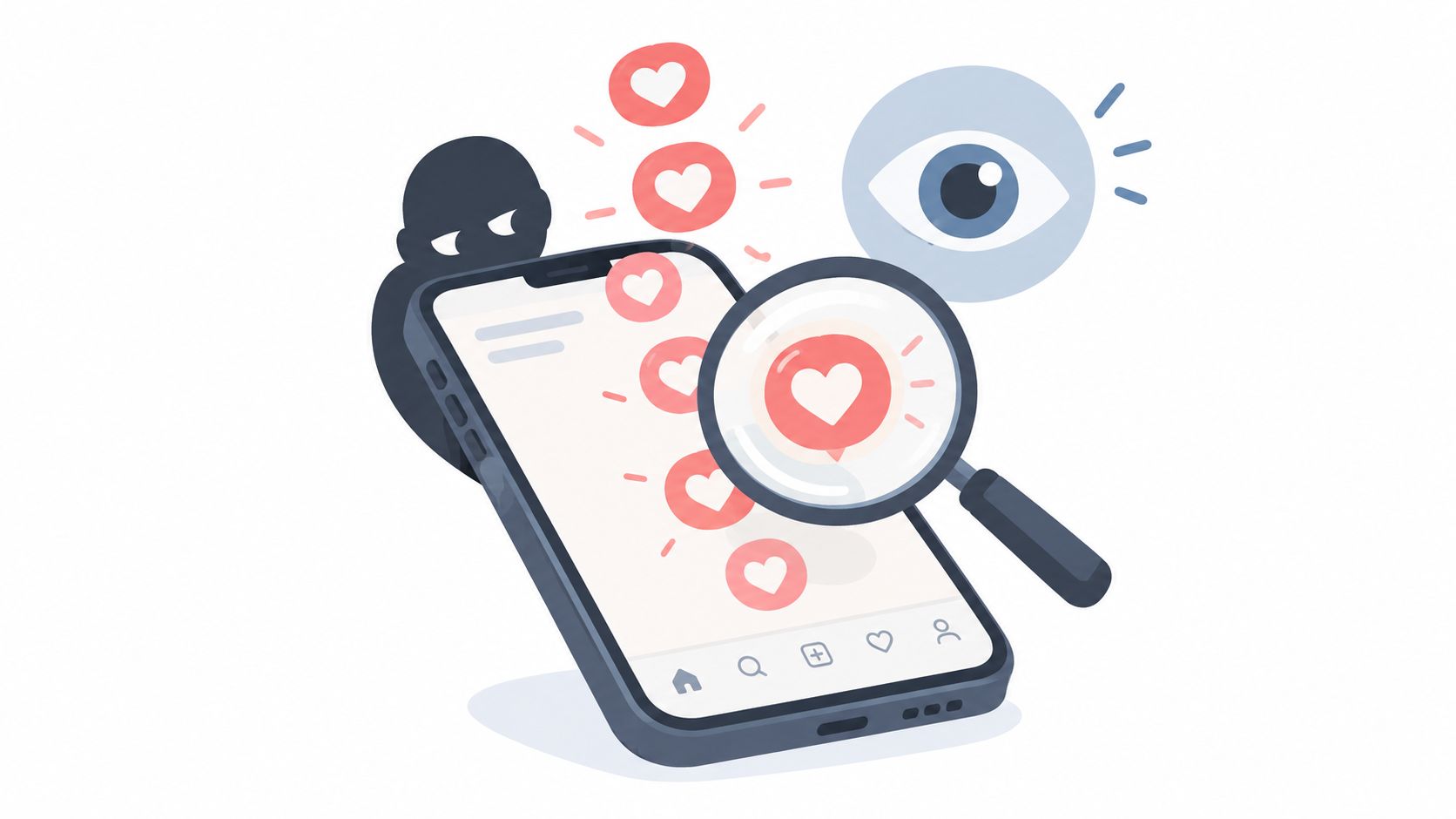
Sometimes: likes on posts you can view and the Reels Friends tab. Each person's 'Likes you've made' setting decides the rest. Here's what is visible.
Short answer: sometimes. You can see someone's like on a specific post or Reel you're allowed to view, and the Friends tab in Reels can show public Reels your friends liked. There's no list of everything a person has liked. Each person also controls this with Instagram's Likes you've made setting (everyone, people they follow, close friends or no one), although the account that posted the content can always see who liked it.
The popular advice that Instagram either shows all friends' likes or shows none of them is too broad. The accurate answer is narrower: a viewer may see an individual like when the related post or Reel is accessible, but Instagram doesn't offer a public profile page containing another person's complete liking history.
On a public post, the liker's username may appear in the visible like information for people who can view that post. A private post has a smaller audience, so its associated likes are limited to approved followers. The post's privacy and the viewer's access matter more than whether the person who pressed Like has a public or private profile. Instagram's visibility guidance describes likes as connected to the audience that can see the individual post.
There's also a newer contextual path. Instagram's Reels Friends feature can surface public Reels that friends have liked or commented on, depending on relationships, settings, availability, and the current interface. That feature doesn't restore a searchable, chronological archive of everything another account has liked.
The practical distinction is simple:
A visible like can establish a specific interaction with an accessible piece of content. It can't establish a person's complete behavior across Instagram.
That boundary prevents a single username, an empty like list, or a Reels recommendation from being treated as proof of motives, relationships, or hidden activity.
Looking for a clearer signal? Likes are scattered across individual posts, but new follows on a public account are easier to check. The Recent Follow Tracker shows who a public profile recently followed, without logging in to Instagram.
Different Instagram screens expose different kinds of evidence. The following table separates what a viewer may observe from what the observation cannot prove.
| Source | What can be seen | Main limit |
|---|---|---|
| Accessible post like list | A viewer may see usernames associated with likes on a post they're allowed to view | It doesn't reveal every post that person has liked or provide exact chronology |
| Reels Friends recommendations | Instagram may surface public Reels that connected friends have liked or commented on | It isn't a complete like history, and visibility depends on settings and availability |
| The account holder's own activity | The account holder can review their own liked-post activity through Instagram's account tools | Other users don't receive the same consolidated archive |
| Private or complete history | Approved followers may see interactions on accessible private content | A viewer without access can't inspect the post, and no public tool can establish a complete personal history |
Instagram's help guidance confirms that visibility is assessed at the individual post or Reel level. It also describes controls that can restrict like visibility to everyone, people an account follows, Close Friends, or nobody, making outside observation dependent on the relevant account and post settings. Instagram like visibility guidance supports the distinction between an exposed interaction and a complete archive.
Like counts add another layer of uncertainty. Instagram introduced a worldwide option to hide public like counts on personal posts and in feeds, while usernames associated with an accessible post may still appear. A hidden count changes what viewers can measure, but it doesn't create a public history of the account holder's liked posts. Meta's announcement about hidden like counts explains why visible usernames and aggregate counts shouldn't be treated as the same evidence.
For definitions and measurement concepts, the Instagram like counter guide covers a different question. It shouldn't be read as a promise that another person's full like history is publicly available.
A viewer can inspect an accessible post directly. The post may show a visible like area or a username associated with the interaction. Opening the available list can reveal whether a particular account appears, but the display isn't a guaranteed, exhaustive, chronologically ordered record of every liker.
The right interpretation is post-specific. Consider these explicitly hypothetical examples:
| Observation | What it establishes | What it doesn't establish |
|---|---|---|
| Alex appears among the visible likes on hypothetical Post A | Alex's username is displayed as associated with that accessible post | When Alex interacted, why Alex interacted, or what else Alex liked |
| Alex doesn't appear in the visible likes on hypothetical Post B | Alex isn't displayed in the available view at that moment | That Alex never liked the post, never liked other content, or removed every related interaction |
A missing name can have several explanations. The like may not be exposed to that viewer, the post may have changed visibility, the interaction may no longer be present, or the displayed list may not show every account in a durable way. The absence of a username is therefore weaker evidence than a visible username, and even a visible username supports only the narrow claim attached to that post.
Private content creates a separate access boundary. People who aren't approved followers of a private account generally can't inspect that account's posts or their associated like information, while approved followers may be able to see it.
Practical rule: Check only what the specific post visibly supports. Don't turn a post-level observation into a profile-wide conclusion.
Reels Friends changes the answer to “can someone see what someone likes on Instagram?” from a categorical no to a conditional yes. Meta describes a Reels area that can surface public content friends have interacted with, including likes and comments. Instagram also provides controls for hiding likes or comments and muting activity bubbles, so the feature doesn't expose the same activity to every viewer.
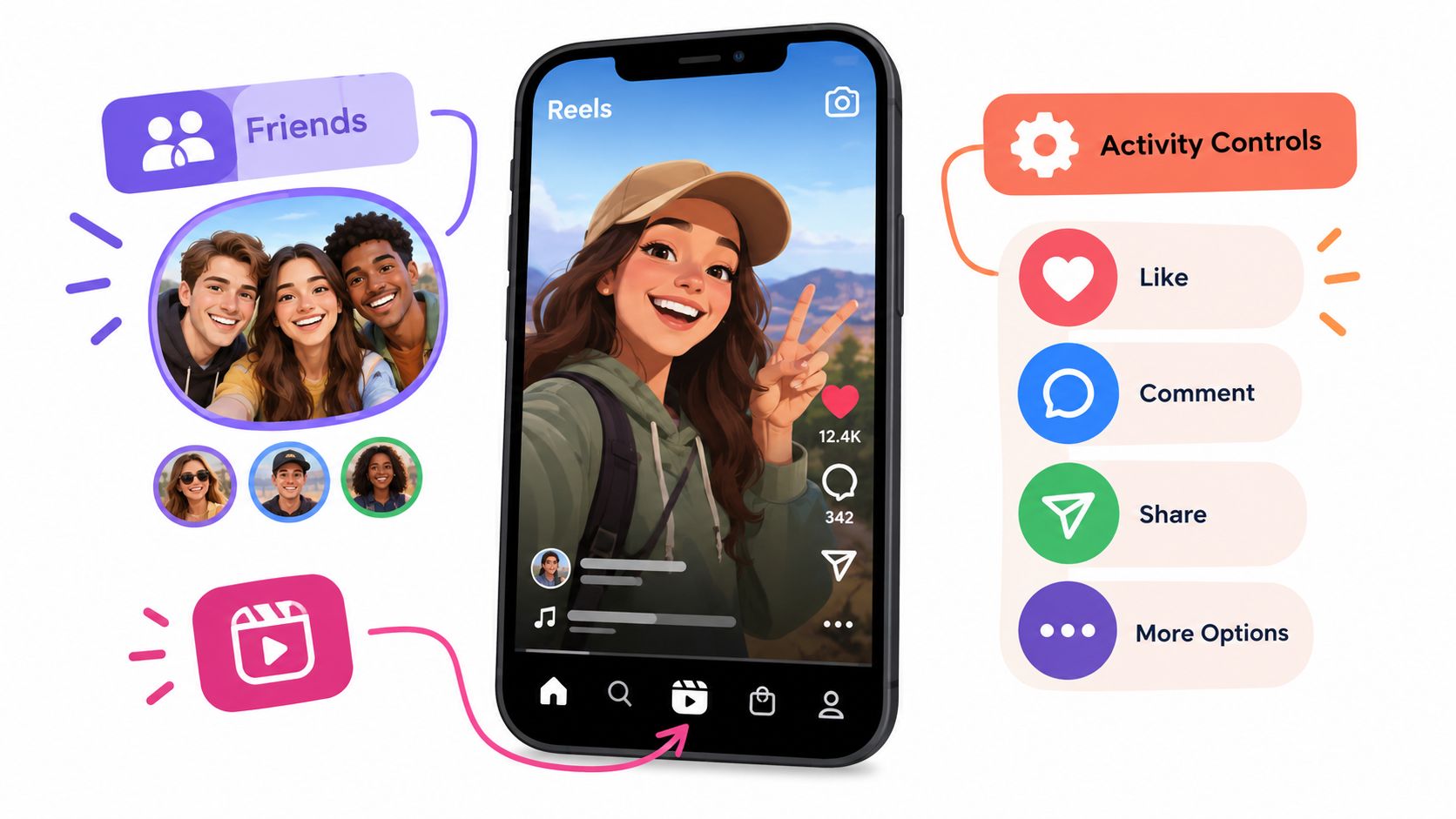
The relevant question is no longer only whether a person liked something. It's also:
Meta's announcement about Reels Friends and activity controls supports this contextual visibility path. It doesn't establish complete coverage, an exact event time, or a permanent record of every interaction.
Reels Friends also shouldn't be confused with the former Following activity feed. That older feed was removed, and the newer Reels feature isn't a replacement for a profile-wide likes archive. A recommendation can surface an interaction without showing everything the person has liked, including interactions hidden by settings or attached to content the viewer can't access.
Instagram treats an account holder's own activity differently from another user's public view. The account holder may access a record of liked posts through Instagram's activity or account-information tools, but that private account view isn't exposed as a public profile tab for everyone else. Instagram's own-liked-posts help material distinguishes personal account information from publicly browsable profile content.
That distinction explains why a tutorial showing a person reviewing their own Likes can mislead readers searching for another account's activity. A screen available after signing into the relevant account doesn't mean an outside viewer can retrieve the same information.
To control who sees your own likes, Instagram's help page gives this path: go to your profile, tap Menu, tap Likes you've made, then choose to allow everyone, people you follow, close friends or no one to see what you like. Whatever you pick, the account that posted the content can still see that you liked it.
Public relationship tools have a narrower role. Comparing another Instagram account can concern available follower or following information, but it shouldn't be presented as access to private likes, comments, or a complete personal activity archive.
An empty view doesn't explain why it's empty. A post may have become private, been deleted, or changed its visibility settings. A viewer may lack approval to see private content, or Instagram may show only selected interaction information rather than a permanent, exhaustive list.
The same caution applies when a person's username is absent from a specific post. That absence can't establish that the person never liked anything else, never liked that post at another point, or chose not to interact for a particular reason. It also can't prove anything about romantic interest, loyalty, conflict, or relationship status.
The former Following activity feed was removed, so it shouldn't be used as a current workflow. Current observation remains tied to individual posts and Reels, not a user-wide chronological feed.
A missing signal is not a motive, and a visible signal is not a complete story.
Third-party claims deserve scrutiny when they promise more access than Instagram's visibility model supports. A credible explanation should answer these questions clearly:
For readers measuring likes on their own posts, the Instagram like tracking guide is the relevant next step. That task measures available engagement on owned content. It isn't the same as reconstructing another person's complete like history.
Unfollowers Track works with available public Instagram information for relationship and account-list checks, not private likes or complete personal activity archives. If you want to know who a public account has been connecting with lately, follows are easier to check than likes: the Recent Follow Tracker shows accounts a public profile recently followed, with no Instagram password.
Partner resource: RemotionAI. This link is included through our content-link exchange; it is not a source for the claims above.
About the author
We are the team that builds and runs Unfollowers Track, a scan-based Instagram tracker. Everything we publish is checked against how the product actually works: scans analyze public profile data only, changes show up by comparing one scan against the next, and we never ask for your Instagram password. Unfollowers Track is owned and operated by NaviStack LLC. Learn more about Unfollowers Track, read how we test and verify claims, or contact us with questions or corrections.
Unfollowers Track
Start with a free preview of who doesn't follow you back. Ongoing tracking then compares each completed scan with the last one, so you can see who unfollowed you in between.
Likes
What Instagram's like count shows, why hidden likes aren't zero, and a copy-ready spreadsheet to track a post's likes-to-followers ratio.
Oct 4, 2026
Likes
Track likes on your own posts with Insights or a simple spreadsheet, see who liked any post you can view, and learn what Instagram keeps hidden.
Oct 1, 2026
Growth & analytics
Pick a free Instagram analytics source by the question you need answered: owner insights, public lookups or manual records, with clear access limits.
Oct 7, 2026
Viewing profiles
Can you see who views your Instagram profile? No. Learn what Instagram actually tracks, why third-party apps fail, and how to monitor public signals safely.
Oct 15, 2026